
07Insights
Insights
Articles on software and technology — how systems are built, the trade-offs behind the decisions, and what we learn shipping real products.
Subscribe by RSS/
More articles
 16 min read
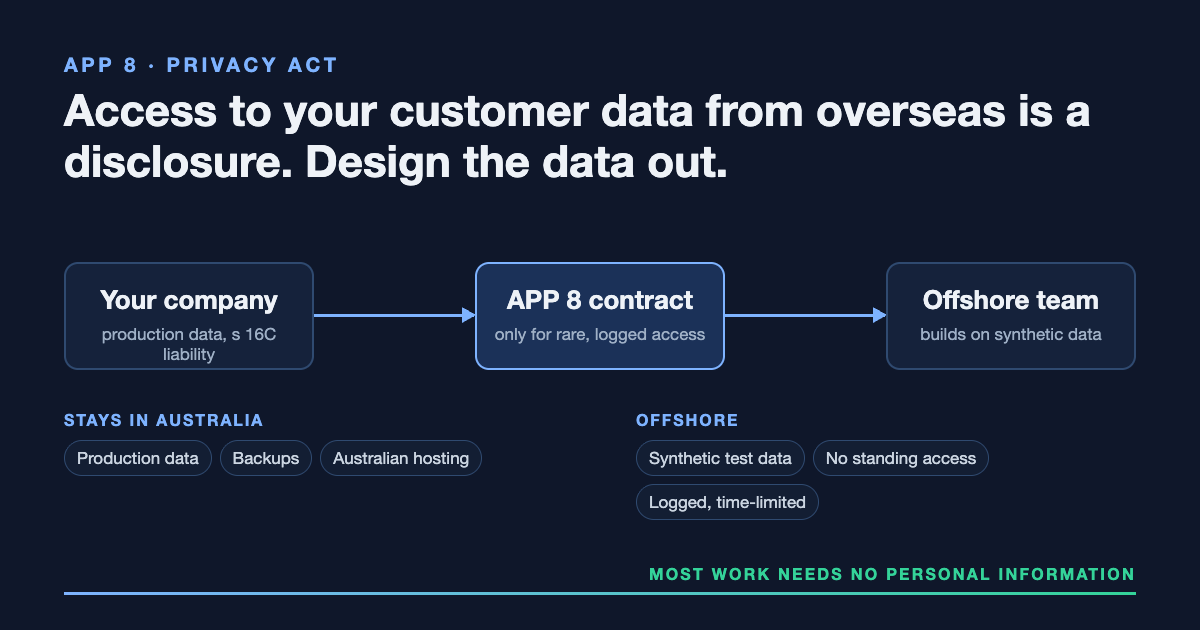
APP 8 Cross-Border Disclosure: The Privacy Act and Offshore Software Teams
The Privacy Act doesn't prohibit hiring an offshore development team. APP 8 applies only when the team can reach personal information, and section 16C keeps you accountable for the vendor even after reasonable steps. What counts as a cross-border disclosure, what the contract needs, how to build on synthetic data, and what a breach at the vendor means under the NDB scheme.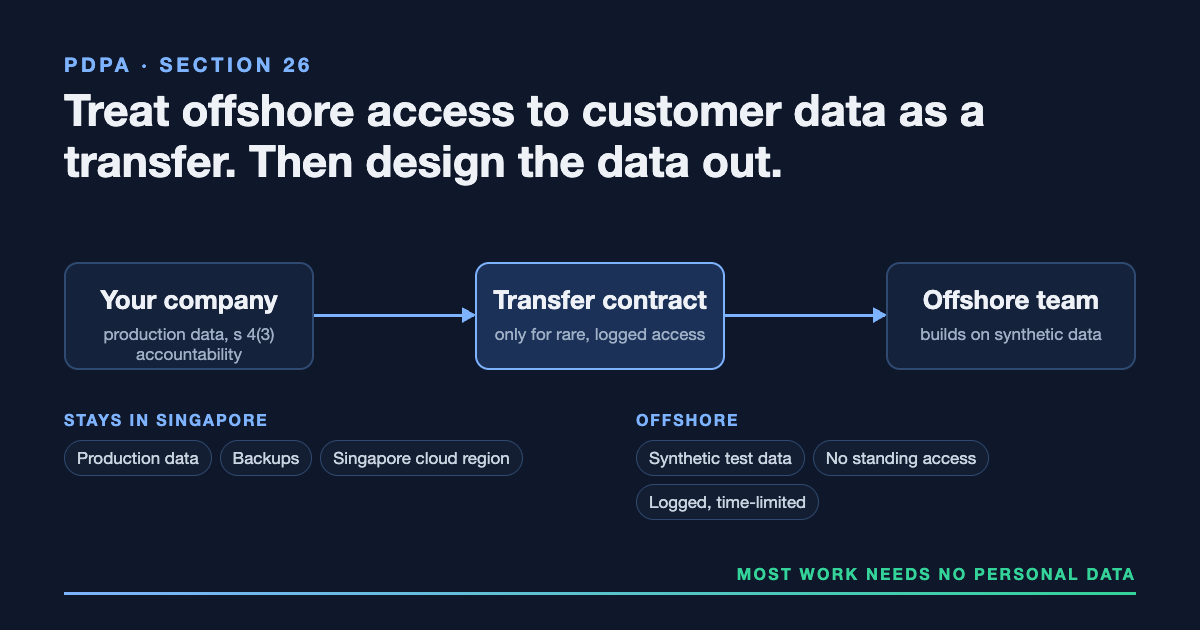 16 min read
PDPA Overseas Transfer: Sending Personal Data to an Offshore Development Team
Singapore's PDPA lets an offshore development team work on your product, but section 26 applies once personal data leaves Singapore, and the safe reading treats access from abroad the same way. What counts as a transfer, what your contract with the vendor must say, how to keep most development away from personal data, the breach clock from Kathmandu to the PDPC, the penalties, and a checklist.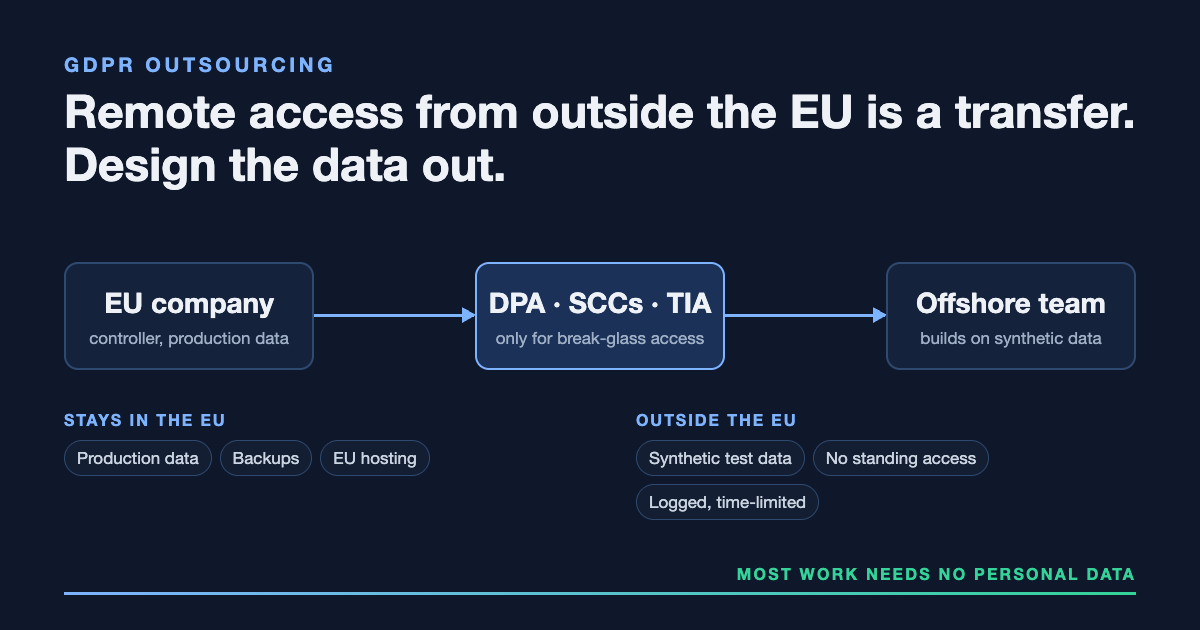 16 min read
GDPR Outsourcing Requirements for Software Development Outside the EU
Outsourcing software development outside the EU is legal under the GDPR, but a vendor's engineers viewing your EU data from abroad counts as a transfer. What the data processing agreement, standard contractual clauses and transfer impact assessment must cover, how to keep personal data out of development, the 72-hour breach clock across time zones, and a checklist.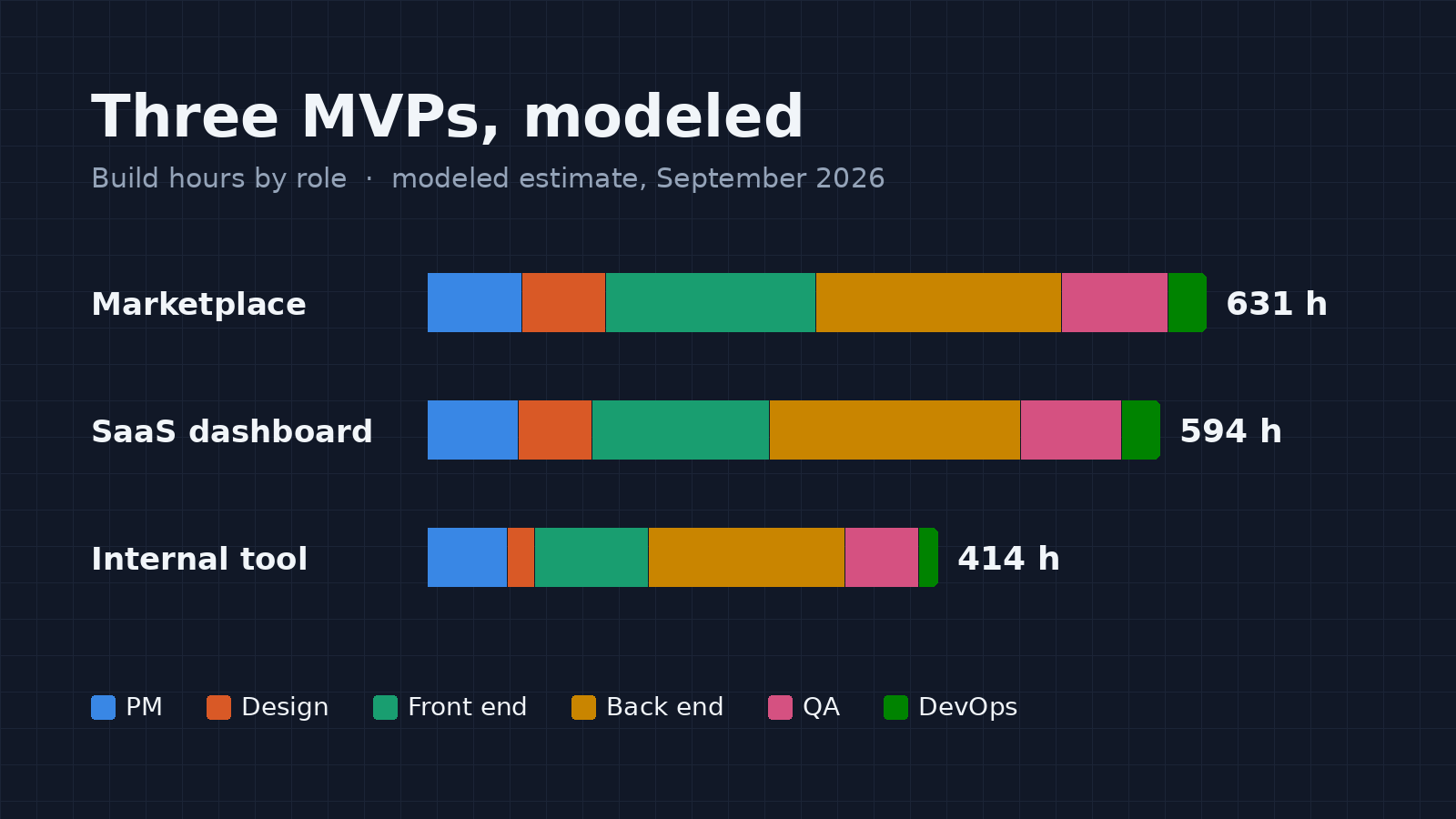 14 min read
How Much Does It Cost to Build an MVP Offshore? Three Budgets, Modeled
Most MVP cost guides give price ranges without the hours behind them. This one publishes the model: a marketplace, a SaaS dashboard and an internal tool, broken down feature by feature with hours for each role and cited offshore rates applied. At a senior Asia rate they come to about $15,000-$27,000. With a budget-fit example, a quote check and the spreadsheet.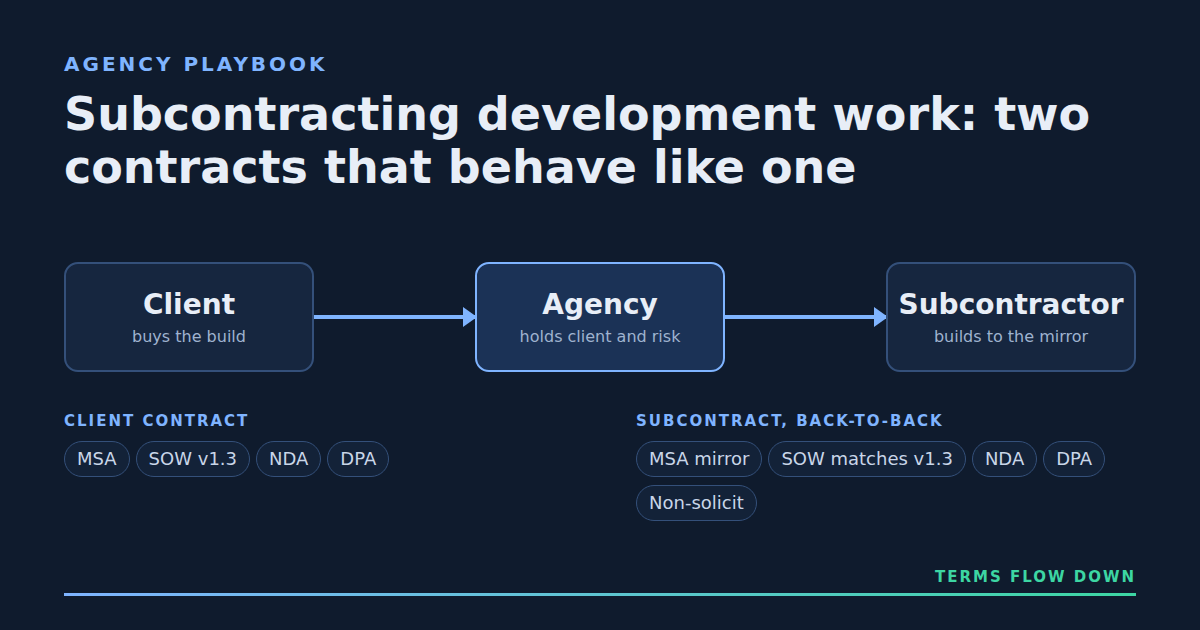 14 min read
How to Subcontract Development Work to Another Company: An Agency Playbook
Subcontracting development work to another company means running two contracts that must behave like one. This playbook covers who holds the client and the delivery risk, the contract stack (MSA, SOW, back-to-back NDA, non-solicit), three failure modes with worked numbers, and a 19-row clause checklist to run before you sign.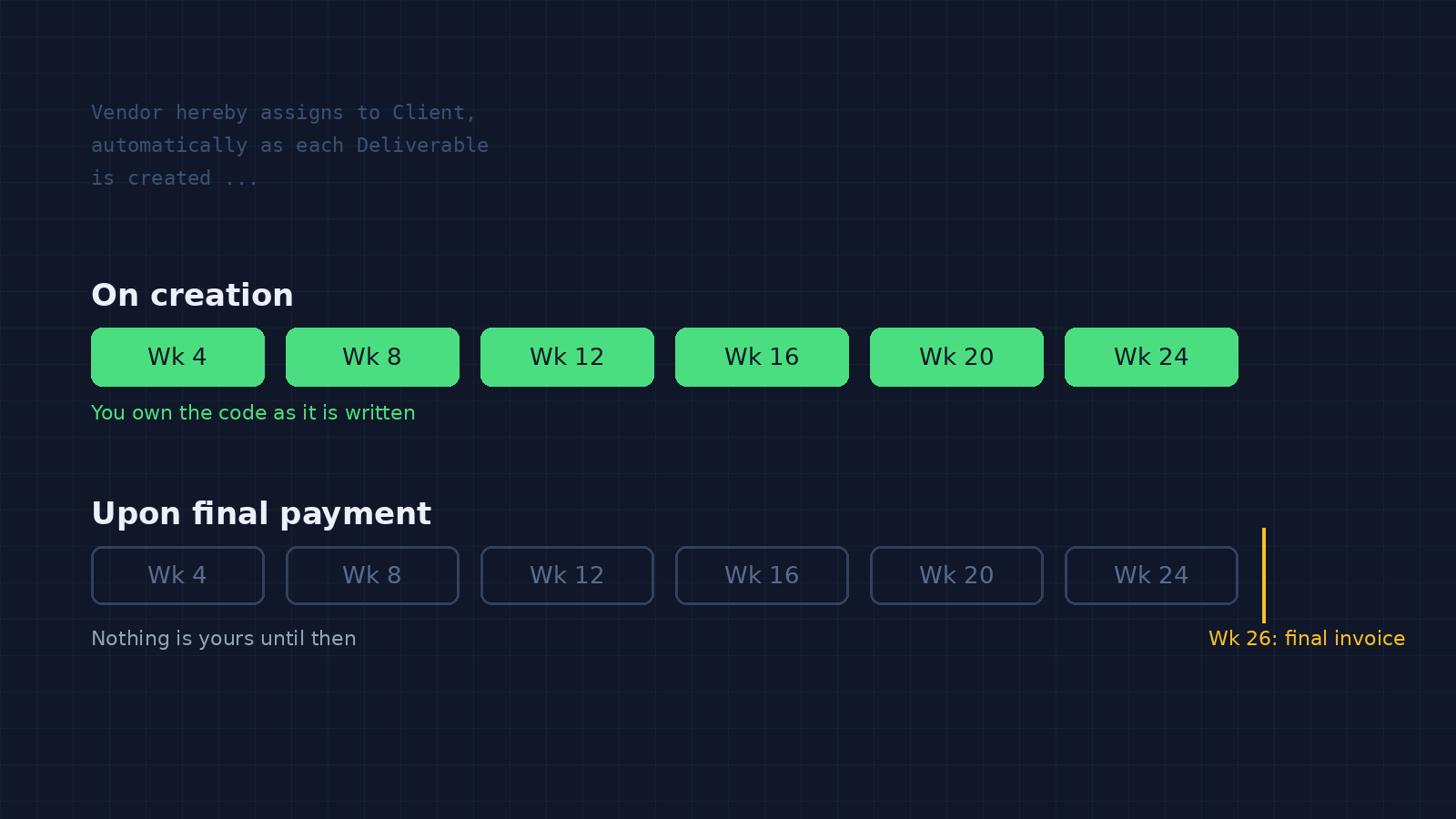 11 min read
An NDA Doesn't Mean You Own Your Code: The IP Assignment Clause for Offshore Software Development
An NDA keeps your code confidential, and a "work made for hire" label rarely covers software written offshore. Ownership moves only through a signed assignment, and timing matters: "upon final payment" can leave code you've already paid for with the vendor. This guide explains why, with a worked example and seven annotated clauses to ask any vendor for.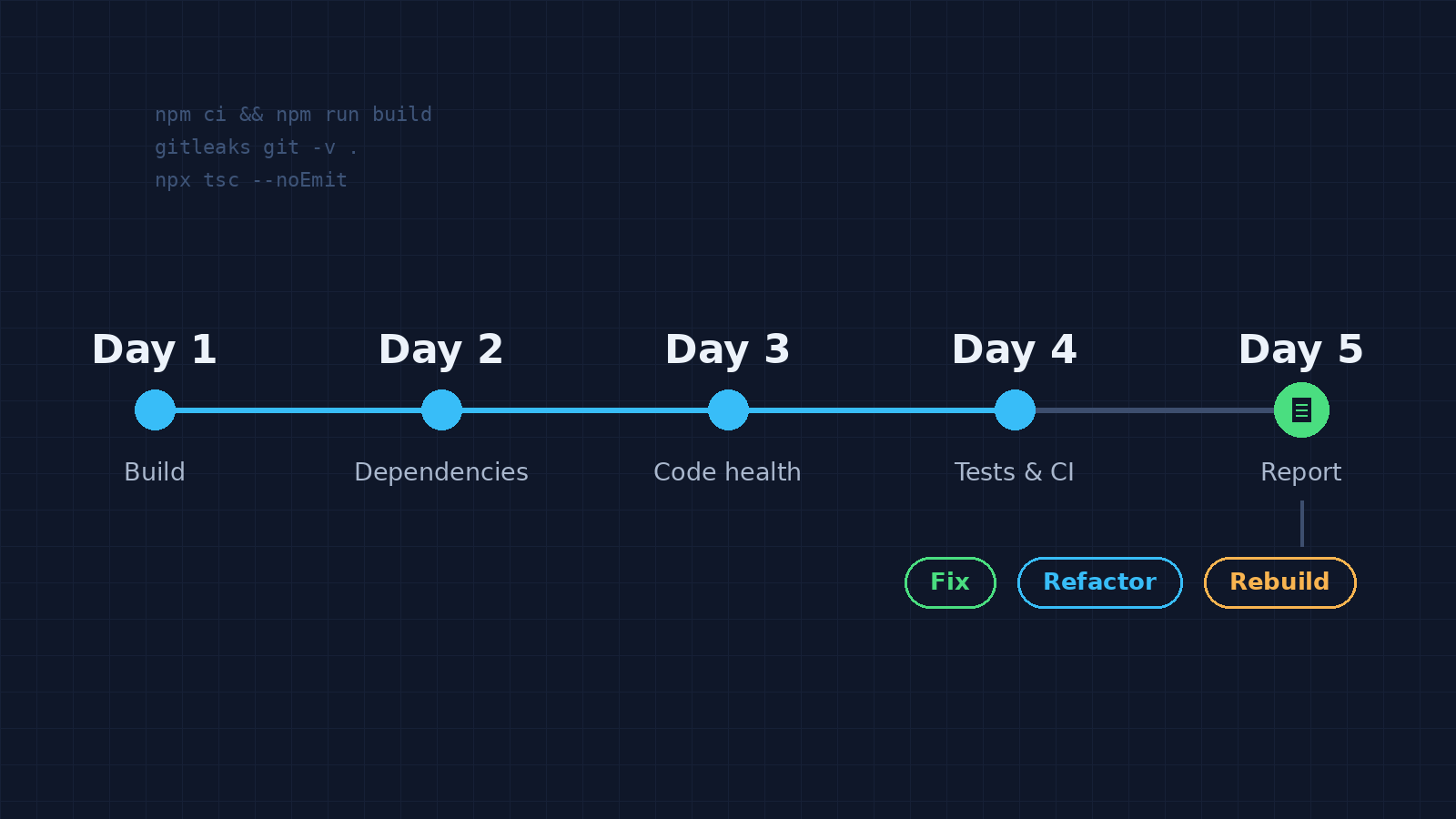 14 min read
Inherited a Codebase From a Previous Developer? A Technical Audit Checklist
Before you change an inherited codebase, audit it for five working days. This checklist gives the commands to run on a React and TypeScript app and what healthy and red-flag results look like for builds, dependencies, secrets, types, tests and CI. It ends with a way to compare remediation hours against a rebuild before you decide.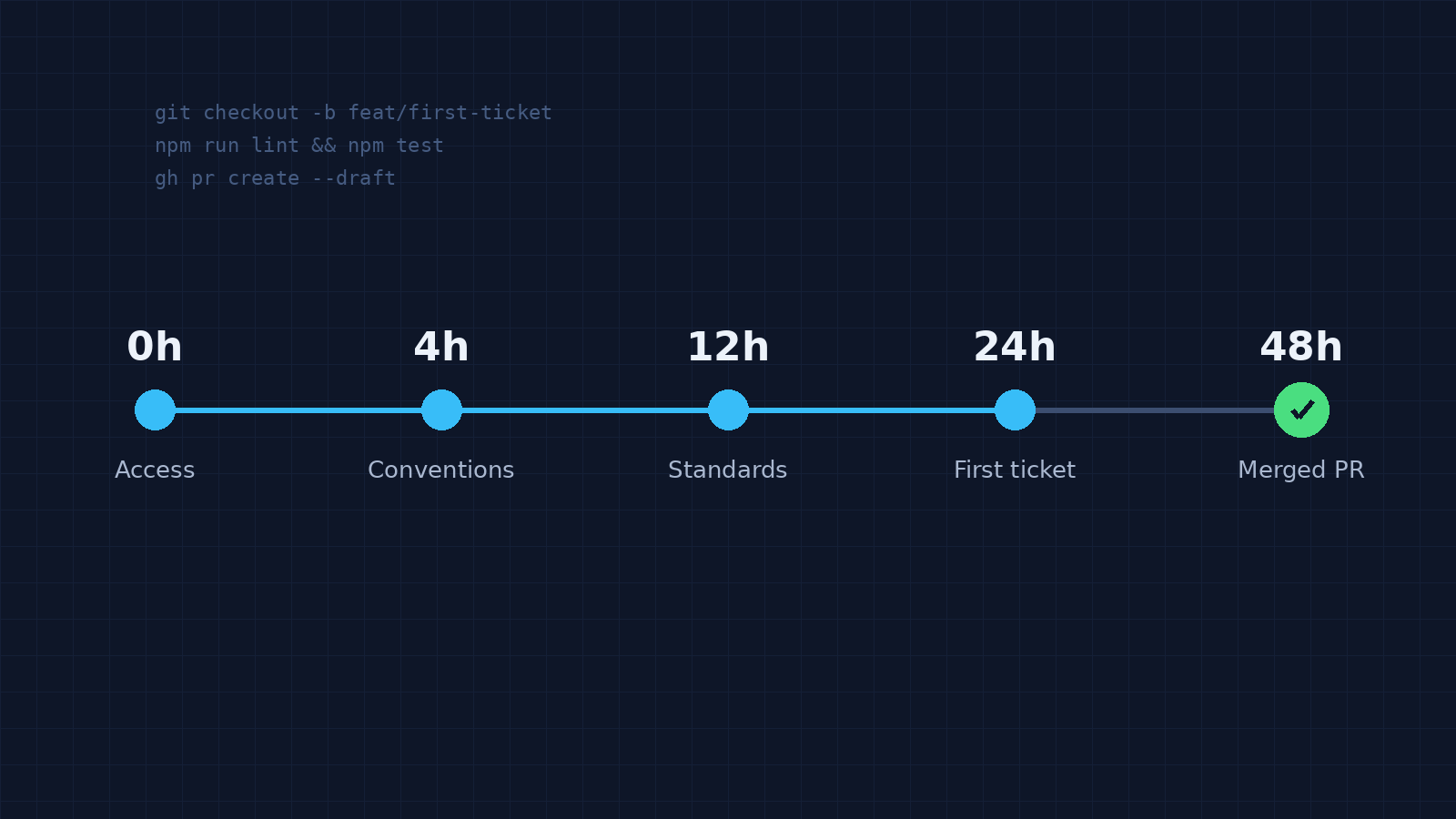 11 min read
Overflow Development Capacity in 48 Hours: A Partner Onboarding Protocol
Overflow capacity only counts once a partner's first reviewed change is merged. This 48-hour protocol covers access in your own accounts, written repo conventions, a definition of done and one real first ticket, with a pass/fail test and a simple way to calibrate the partner's estimates before you commit a client deadline. 21 min read
11 Red Flags When Hiring an Offshore Development Company
Buyers who got burned by an offshore development company rarely saw it coming on the sales call. These eleven red flags come from first-hand accounts by buyers, engineers and managers on Reddit, Hacker News and Blind, not from our own client work, and each comes with a test you can run before signing or in the first month. 16 min read
White-Label React Development: The Economics, From an Agency's Side of the Table
On a rate card, white-label React development looks like a margin near 70 percent. This is the arithmetic from the agency's side: what an in-house React developer costs per billable hour, what a white-label hour costs once your own review time is added, the one ratio that decides the margin, and what to demand from a partner before you name a client. 17 min read
Taking Over a Failed Offshore Project: A 30-Day Recovery Protocol
Taking over a stalled offshore project starts with the accounts, not the code: inventory and secure access in the first three days, audit without fixing anything for the following week, decide what to repair and what to rebuild, then ship one small change end to end. Includes an access inventory, a repair-or-rebuild test, and what 30 days will not fix.
Newsletter
New writing, when there is something worth sending
Occasional notes on architecture and delivery practice — the same things we write about here, sent when a piece is published. Roughly once a month, never more.